


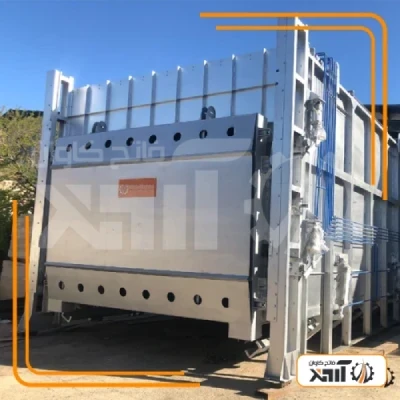
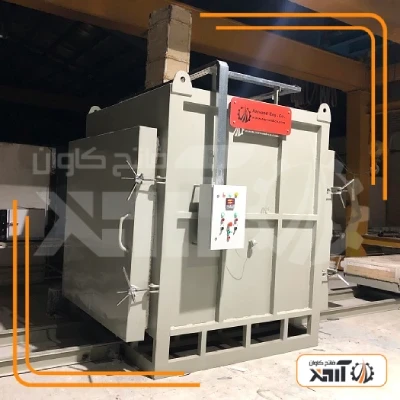
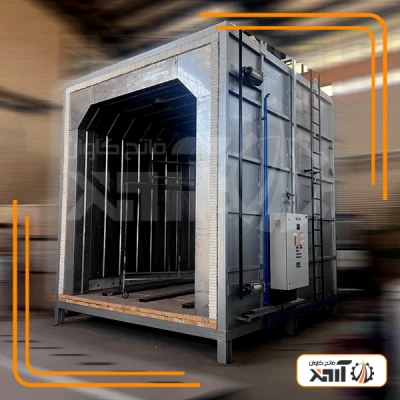
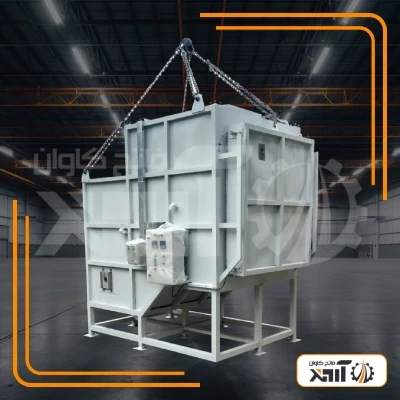
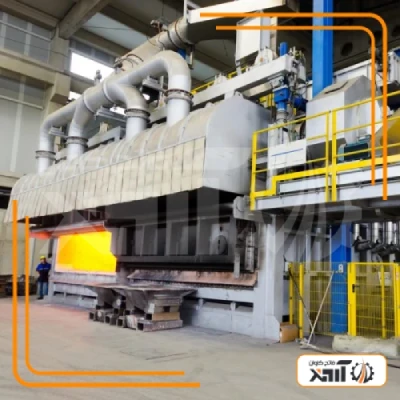
Furnaces are among the most common tools used to increase the temperature of objects. One type of furnace that is widely used in many industries is the industrial furnace. These furnaces have various advantages and disadvantages, but their benefits outweigh their drawbacks. If you choose reputable companies within the country, such as Fath Kavane Arvand, for the procurement and purchase of a furnace, you will equip your organization with one of the most modern and state-of-the-art furnaces in the country.
Advantages of Industrial Furnaces
Industrial furnaces are among the essential tools in industry used for heating materials. These systems are utilized in various sectors such as steel production, casting, ceramics manufacturing, aluminum production, and others. Due to their high power and their ability to withstand very high temperatures, industrial furnaces are considered one of the most effective pieces of equipment for producing high‑quality products. In industrial furnaces, temperature control is of great importance.
One of the main reasons industrial furnaces have become some of the most practical systems for increasing the temperature of materials is the range of advantages they offer. Some of the key advantages of industrial furnaces include:
- They can generate very high temperatures.
- Some models have high capacity for producing various materials on a large scale.
- Industrial furnaces help maintain control over the quality and precision of product manufacturing.
- Some industrial furnaces are equipped with systems such as material temperature control equipment.

Disadvantages of Industrial Furnaces
Despite the significant advantages of industrial furnaces, their challenges are also noteworthy. One of the main concerns associated with operating industrial furnaces is environmental pollution. These furnaces produce solid particles, carbon dioxide, and nitrogen oxides, which contribute to air pollution.
However, this drawback is not considered insurmountable. Furnaces that are designed and manufactured using the latest global technologies tend to create fewer environmental challenges. For this reason, we recommend choosing reputable companies such as Fath Kavane Arvand for purchasing and acquiring industrial furnaces. The furnaces produced by this company generate minimal environmental pollution.
Arvand Engineering Company, leveraging modern technologies, designs and manufactures fully automatic temperature and process control systems. Relying on the knowledge and experience of its experts and specialists, it incorporates the latest global technologies in the production of industrial furnaces.
Types of Industrial Furnaces
Industrial furnaces are classified based on various factors. One such classification is as follows:
1) Types of industrial furnaces based on application
Industrial furnaces are available on the market in the following types depending on their application:
Wet furnaces (melting furnaces)
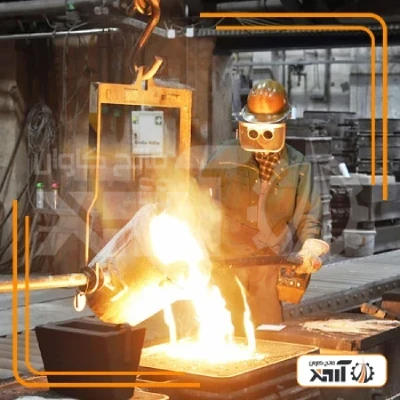
Wet furnaces are furnaces that change the phase of solid objects. After different parts and products are placed in this type of furnace, they leave the solid phase and turn into liquid.
Dry furnaces (heat-treatment furnaces)
Dry furnaces, also known as heat-treatment furnaces, are furnaces whose main focus is changing the microstructure of the part. In these furnaces, no phase change occurs. In other words, when a part is placed in these furnaces, the solid piece does not change from solid to liquid.
It is also worth noting here that heat-treatment furnaces themselves include various types, as follows:
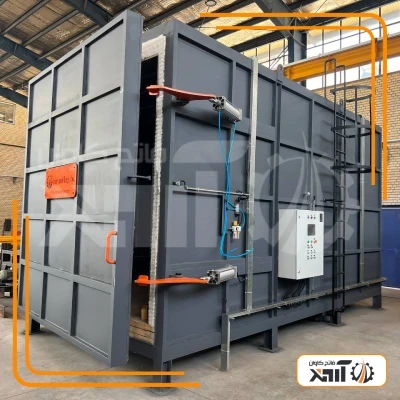
- Heat-treatment furnaces with a fixed structure: this category includes chamber furnaces, tunnel furnaces, and ladle furnaces.
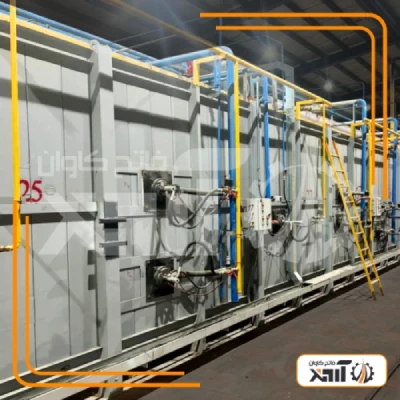
- Heat-treatment furnaces with a movable structure: this category includes continuous conveyor-belt furnaces, continuous burner-fired furnaces, rotary furnaces, and continuous roller furnaces.

2) Types of Industrial Furnaces Based on the Energy Source Used
Different fuels are utilized to ignite industrial furnaces. The types of furnaces based on the energy source used for power supply are as follows:
- Furnaces with solid fuel
- Furnaces with liquid fuel
- Fossil-fuel furnaces
- Electric furnaces
- Atmospheric furnaces: this category includes hot atmosphere furnaces, vacuum atmosphere furnaces, and hot gas atmosphere furnaces.
Purchasing an Industrial Furnace
For any industry to purchase a suitable industrial furnace, it is essential to consider important and fundamental factors such as the type of material, pressure, temperature, and specific needs. All these factors must be taken into account when purchasing industrial furnaces to ensure the right furnace is acquired.
When buying industrial furnaces from Fath Kavane Arvand, it is also crucial to consider the advantages and disadvantages of the furnaces. Understanding these issues leads to the purchase of a functional furnace that can meet all existing needs. Industries that prioritize capital preservation should not overlook this very important and key aspect.
Conclusion
We have discussed industrial furnaces, explained their advantages and disadvantages, and noted that each industry should act based on its specific needs when acquiring industrial furnaces. If you are not well-informed about industrial furnaces, you can contact the professional sales department of Fath Kavane Arvand. The sales team, with their comprehensive and detailed knowledge of various furnace types, can assist you in selecting the best type of furnace for your requirements.

