


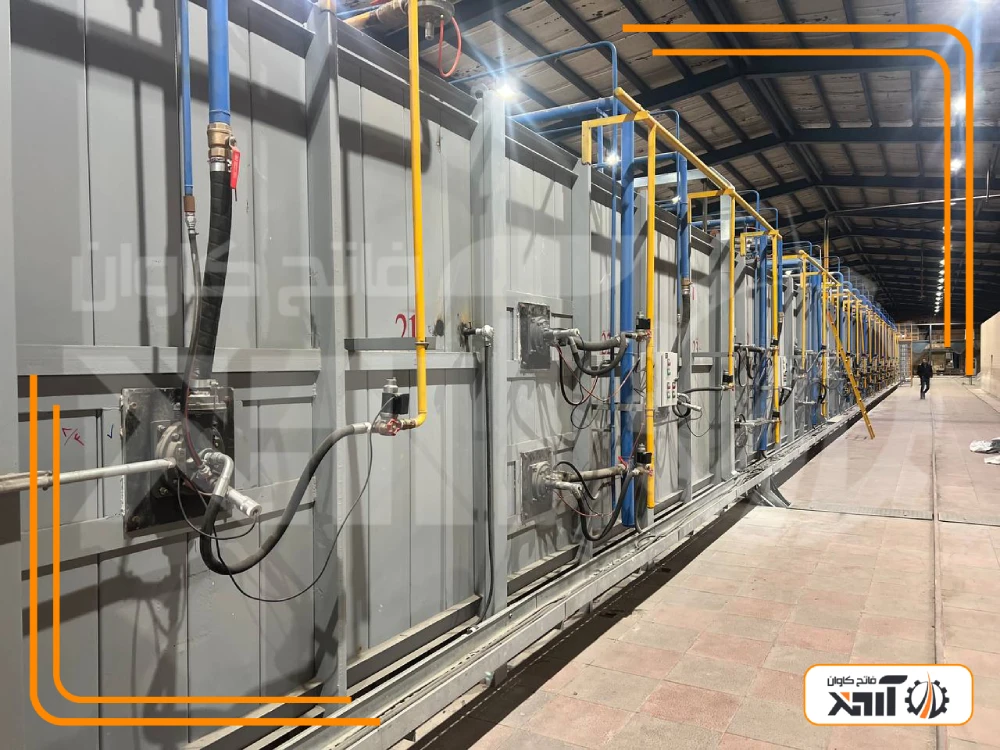
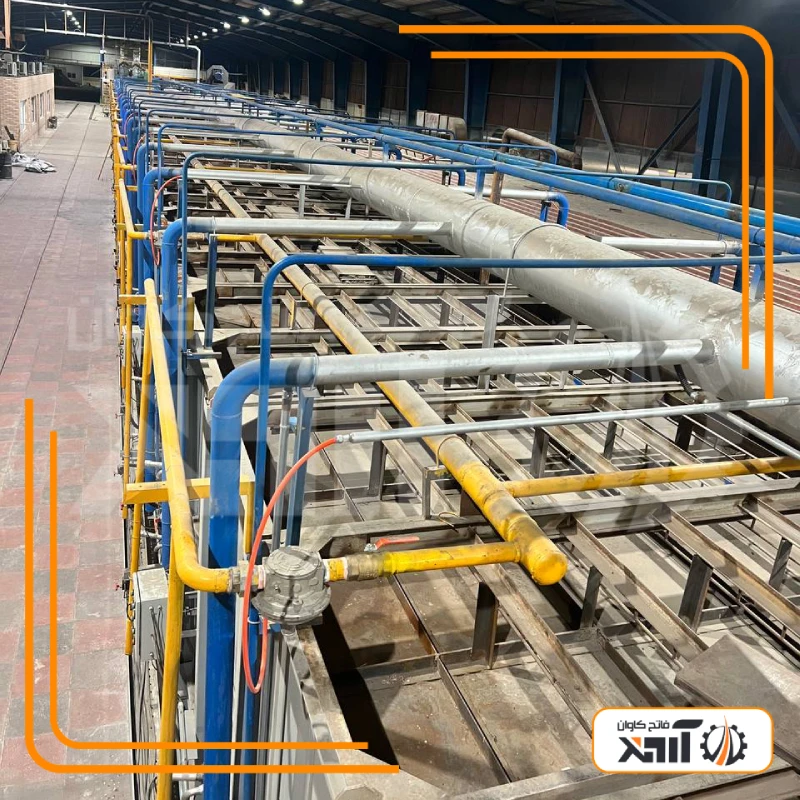
Manufacturer of sponge iron tunnel furnace
The sponge iron tunnel furnace is one of the main pieces of equipment in the steel industry and is used to produce sponge iron from iron ore. With its unique features, this type of furnace has become one of the major methods for sponge iron production worldwide and is widely utilized in the steel industry.
The sponge iron tunnel furnace operates differently from other types of furnaces. In this furnace, iron ore—prepared in a suitable form—is fed into the furnace at very high temperatures. Through the application of intense heat, the iron contained in the ore is reduced and separated, exiting the furnace in the form of sponge iron, where it is collected. This process is complex and requires precise control of temperature and time.
Review of Tunnel Furnace Technology for Direct Reduction and Sponge Iron Production
In 1911, tunnel furnaces were first used in Sweden to produce sponge iron. At that time, this method became known as the Höganäs process. Over the years, significant developments have been made in sponge iron production using tunnel furnaces, and today the process has evolved into an efficient method that provides suitable productivity for sponge iron manufacturing.
One of the major advantages of the sponge iron tunnel furnace is its high production rate. Compared to other furnace types, it can produce large quantities of sponge iron in a shorter period of time. This capability has made the tunnel furnace one of the key technologies in the steel industry and a leading method for sponge iron production worldwide.
In addition to its high speed, the sponge iron tunnel furnace offers other advantages. Notably, it can utilize lower-grade iron ore. While many other furnaces require high-quality iron ore, the tunnel furnace can process lower-grade ore and, through its specific reduction process, produce sponge iron of desirable quality.
Another important advantage of the sponge iron tunnel furnace is the possibility of establishing small-scale production units. These units can be constructed and commissioned with relatively low capital investment. From an economic standpoint, launching such units is cost-effective and financially justifiable.
It should also be noted that in the design and construction of sponge iron tunnel furnaces by Fateh Kavan Arvand Company, both hematite and magnetite iron ores can be used in the process.
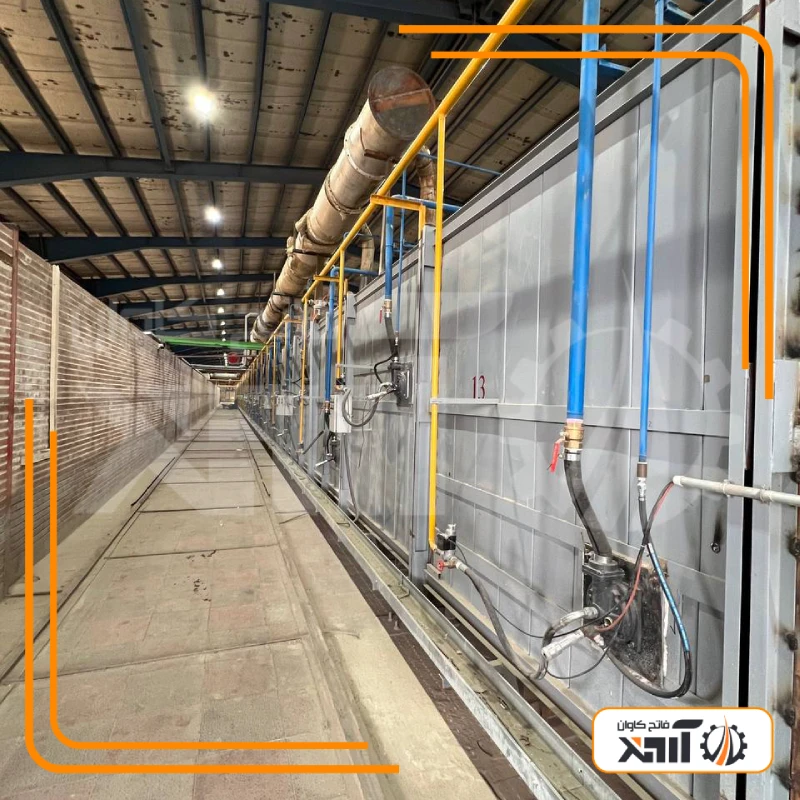
Applications of Sponge Iron Tunnel Furnaces
When sponge iron is to be produced at relatively low capacities, the use of a sponge iron tunnel furnace is recommended. The concept of using tunnel furnaces has been known for a long time, but in recent years their use has increased again, particularly in China. One of the advantages of using small tunnel furnaces is the production of stabilized iron along with an intermediate product. Today, industries that require sponge iron and wish to produce it on a small scale make use of sponge iron tunnel furnaces manufactured by Fateh Kavan Arvand Company.
In addition, due to the use of advanced technology, sponge iron tunnel furnaces require significantly less water compared to many other furnace types. This is an important advantage in regions facing water shortages and has made this type of furnace highly attractive within the steel industry.
Considering these advantages, sponge iron tunnel furnaces have become widely recognized as one of the major technologies for sponge iron production worldwide and are extensively used in the steel industry. These advanced systems help increase efficiency and reduce costs in steel production while supporting the development of the metals industry. Sponge iron is widely used in steelmaking processes, and it is considered an ideal raw material for producing stainless steel, alloy steels, tool steels, and bearing steels.
Compared with scrap iron, sponge iron offers many advantages. For this reason, despite the potentially higher cost, sponge iron is often preferred over scrap iron. In other words, industries that aim to produce high‑quality products rely on sponge iron produced by tunnel furnaces to manufacture the steel components they require. Sponge iron is therefore regarded as a high‑quality raw material with a high purity level for steel production processes.
Advantages of Sponge Iron Tunnel Furnaces
- Production requires minimal technical and mechanical equipment.
- Causes fewer environmental problems.
- Easier transportation and handling.
- Greater uniformity in chemical composition.
- Due to its porous (non‑dense) structure, harmful elements are reduced.
- No pelletizing process is required.
- Offers high flexibility in relation to the feed input used for sponge iron production.
- Various types of iron ore can be used in the process.
- The resulting product has very high quality.
- Good flexibility with respect to production interruptions.
- Production can be established with relatively low capital investment.
- Only a small amount of thermal coal is required for sponge iron production.
- The product obtained through this method is a better alternative to impure scrap iron.
- The ability to use natural gas as an economical and clean energy source is another advantage of sponge iron production in tunnel furnaces.
- In tunnel furnace production, there are no significant limitations on using low‑grade coal with high reactivity.
- The use of sponge iron helps maintain high quality in the steelmaking process.
It should also be noted that not only sponge iron itself has numerous applications, but sponge iron powder is also widely used in metallurgy industries. Iron powder is considered an ideal material for manufacturing a wide range of components.
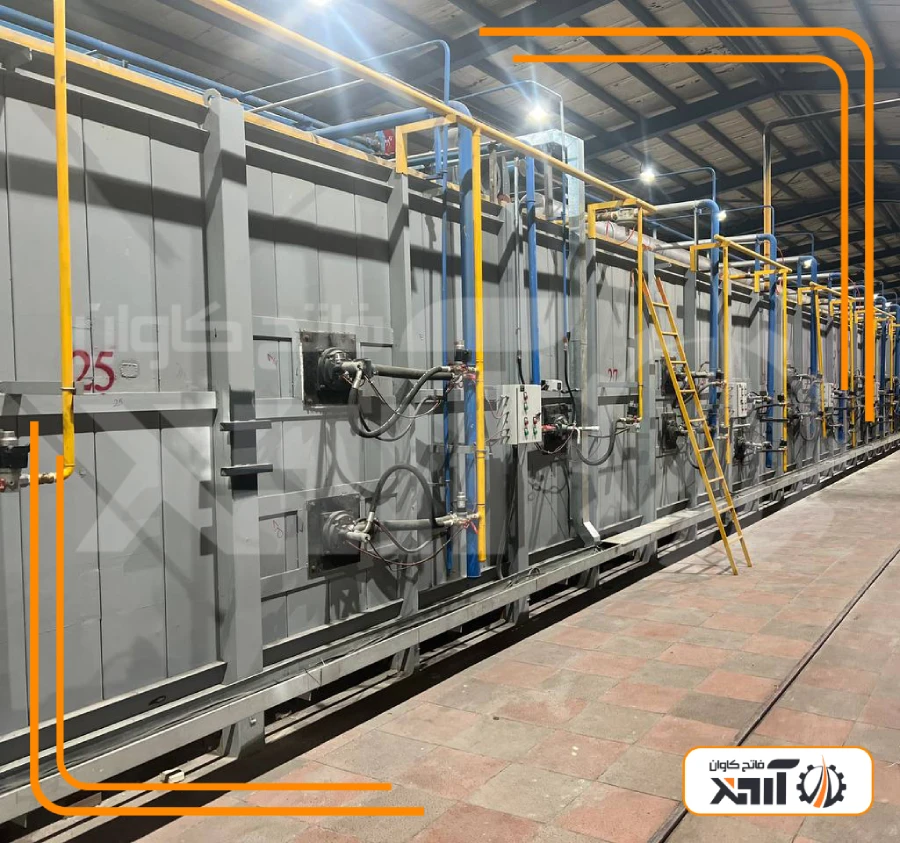
Sponge Iron Production Process
Before hematite and magnetite ores are used for sponge iron production, they must first lose their moisture content. When the moisture level of the iron ore falls below 3%, it becomes suitable for use in sponge iron production. Another material required in this process is a mixture of dolomite and coal. These materials must also be dried so that they are suitable for use in the production process.
For producing sponge iron, specific proportions of iron ore and the dolomite–coal mixture are required. Once these ratios are determined, the sponge iron production process in the tunnel furnace begins.
Stages of Sponge Iron Production in Tunnel Furnaces
- The raw materials mentioned above undergo crushing and screening, after which they are mixed in specified proportions in a mixer and finally stored in silos.
- In the next step, the materials are transferred to the charging system and placed inside silicon carbide crucibles.
- The crucibles are then moved onto the tunnel furnace wagons, where they undergo preheating, reduction, and cooling processes.
- The sponge iron produced at the end of the process is subjected to crushing, magnetic separation, and briquetting, resulting in the production of iron powder and cold sponge iron briquettes.
Conclusion
Fateh Kavan Arvand Company is the first and largest manufacturer of sponge iron tunnel furnaces in the country, maintaining strong cooperation with many well‑known industrial plants to meet their operational requirements.
Industries that require specific types of furnaces for sponge iron production and reduction processes can contact us. We design and manufacture these furnaces precisely according to the specifications and requirements defined by our clients. Our company is also committed to providing high‑quality manufacturing services and reliable after‑sales support to our customers.

