


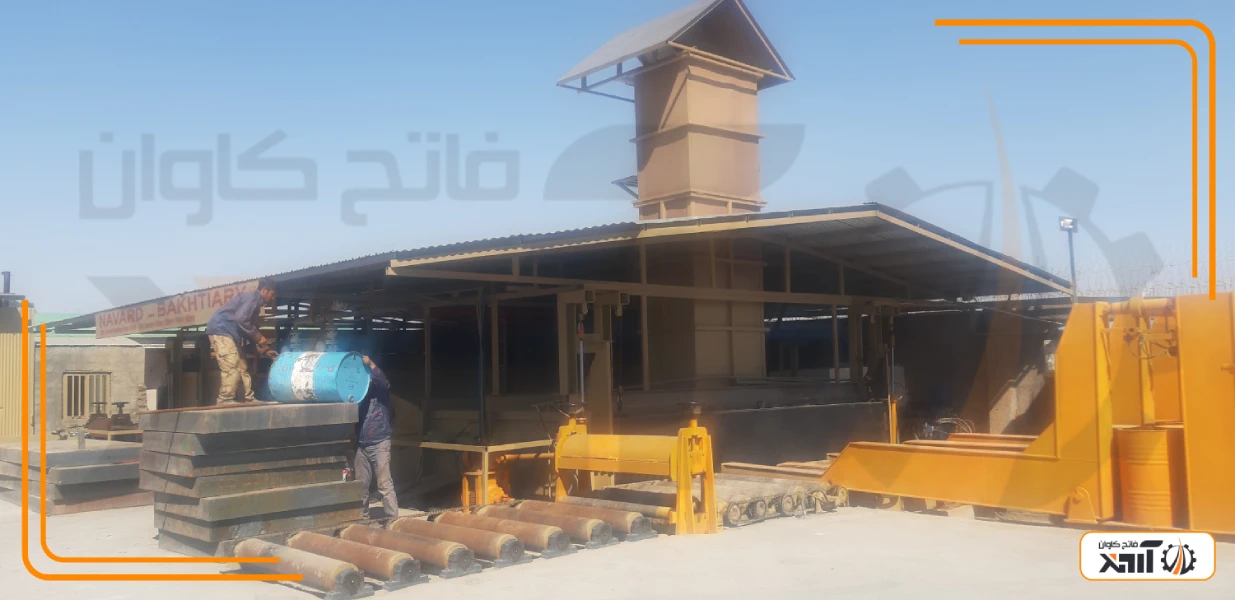
Preheating furnaces for rolling, referred to as Preheating Furnaces for Rolling and Oxidation, are used to heat billets and sections before the rolling process and bring them to the required hot‑working temperature.
Types of Rolling Preheating Furnaces
In general, rolling preheating furnaces perform the same function, but they differ in appearance, shape, and dimensions. They are commonly constructed in rectangular, square, or circular forms. In a rolling preheating furnace, steel billets enter from one side and are discharged from the other side using various methods.
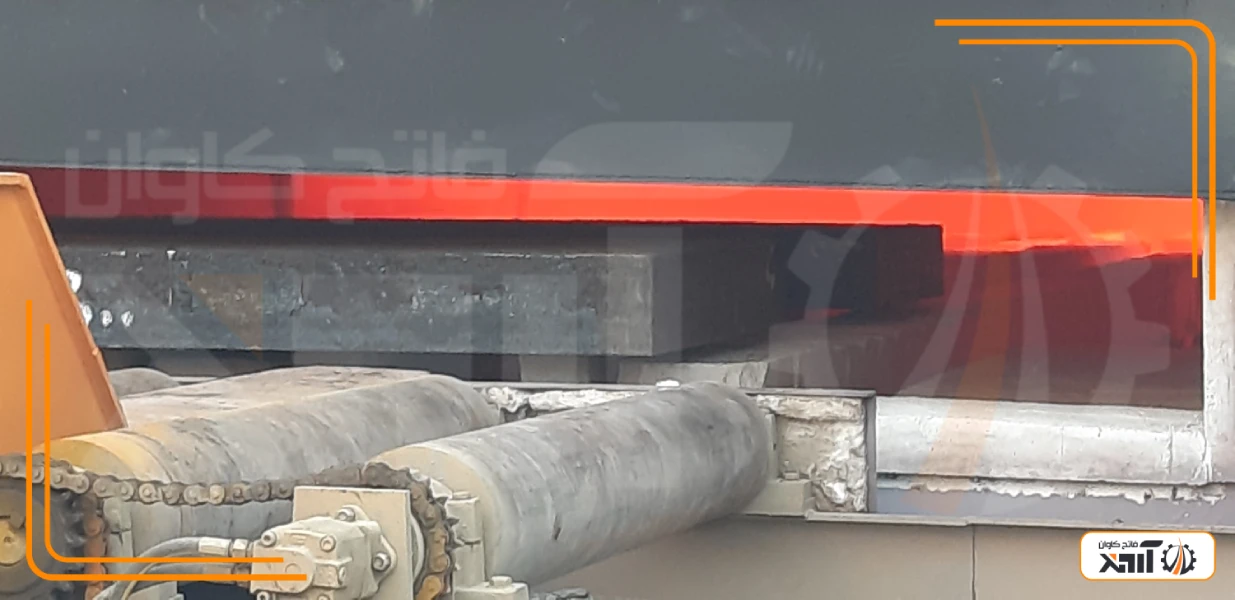
Types of Preheating Furnaces Based on the Billet Movement Mechanism Inside the Furnace
Preheating furnaces can be classified according to the mechanism by which billets move inside them, as follows:
Pusher Furnace
A pusher furnace is a type of industrial furnace used to heat materials in high‑capacity continuous processes. In this type of furnace, billets are pushed sequentially into the furnace.
These furnaces are designed for continuous, high‑volume processes. In other words, materials continuously enter and exit the furnace.
Walking Beam Furnace (Step‑Beam Preheating Furnace)
These furnaces use a walking or stepping beam system to move billets inside the furnace. Materials are transferred step by step from one position to another.
Due to the gentler and more controlled movement of materials, these furnaces have advantages compared to pusher furnaces.
Walking beam furnaces provide higher precision and more uniform heating of parts and are widely used in advanced industries.
Walking Hearth Furnace
In a walking hearth furnace, the steel piece rests on fixed refractory supports. These supports extend through the furnace floor, and when the materials remain stationary inside the furnace, the tips of these supports are positioned above the furnace floor.
This arrangement allows furnace gases to circulate between the lower surfaces of the material and the furnace floor.
Roller Hearth Furnace
A roller hearth furnace is used for heating very long billets, blooms, or slabs when preheating them in pusher or walking beam furnaces is not practical.
In this type of furnace, the furnace floor consists of a series of water‑cooled driven rollers that move the pieces forward.
Rotary Hearth Furnace
A rotary hearth furnace is a type of rotating furnace in which parts move along a moving hearth (usually rail‑like). It is used for heating large materials in the steel industry.
One of the advantages of this furnace is the uniform movement of parts along the furnace, which prevents them from sticking to each other or to the furnace walls.
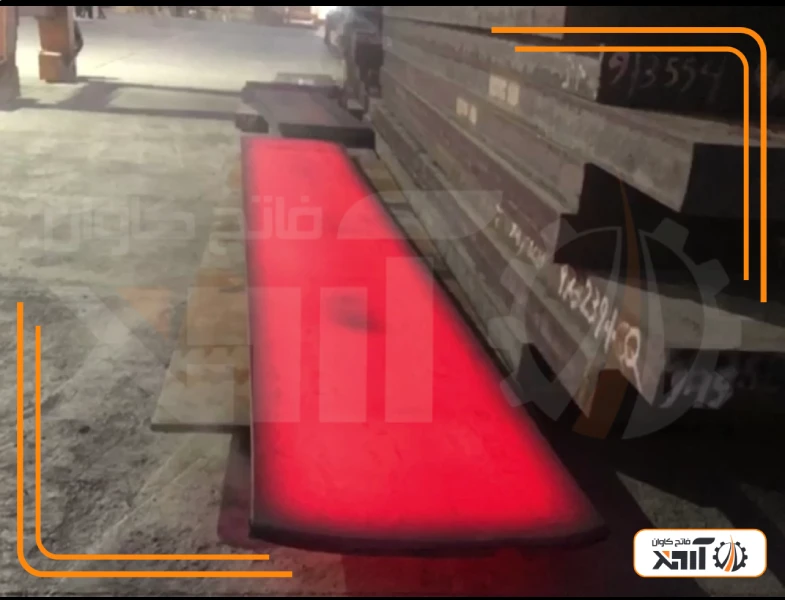
Required Temperature of Rolling Furnaces
In general, the furnace temperature varies depending on the dimensions, thickness, steel type, and rolling stages. However, the temperature in preheating furnaces is typically adjustable between 1100 and 1300°C.
The heating system in these furnaces distributes heat uniformly. The atmosphere inside rolling preheating furnaces must be managed in such a way that the oxidation process and billet corrosion are minimized, and no changes occur in the chemical composition of the sections.
Features and Advantages of Rolling Preheating Furnaces
- Easy operation and rapid heating
- Ability to synchronize with other machinery in the production line
- Uniform heating with minimal temperature difference between the surface and the core of the billet or workpiece
- Reduced pollution and increased operational safety
- Minimal oxidation when the furnace is properly controlled
Manufacturing Various Types of Preheating Furnaces
For consultation regarding the design, manufacturing, and installation of various types of rolling preheating furnaces—including pusher, walking beam, walking hearth, roller hearth, and rotary hearth furnaces—you may contact the experts of Fateh Kavan Arvand Engineering Company.
Preheating Furnace Atmosphere
The amount of available oxygen is one of the main factors in the formation of iron oxides. Oxygen enters the furnace atmosphere in two ways. One is through excess air that is injected into the furnace by the burner along with the fuel, and the other is through openings and gaps around the furnace due to the negative pressure inside it. Therefore, by reducing the excess air of the burner and sealing furnace openings, the oxygen level in the furnace atmosphere can be significantly reduced.

