


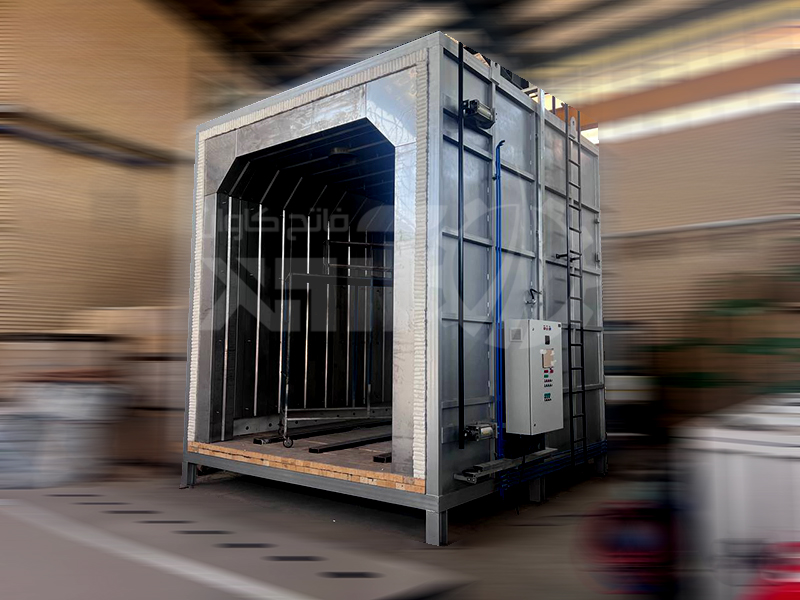
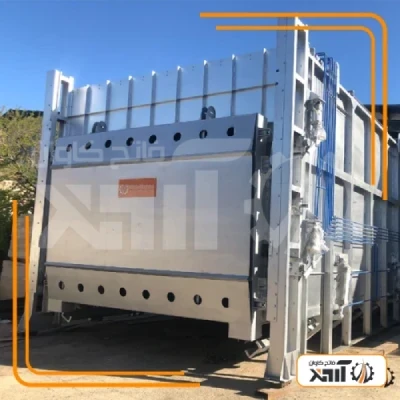

A heat treatment furnace is a device or industrial oven used to perform various heat treatment processes. This equipment is designed to generate heat and transfer it to different materials, such as metals, ceramics, and glass. Heat treatment furnaces are widely used in industries like steel production, ceramics, glass manufacturing, mineral processing, and other related sectors.
Heat treatment furnaces can be designed and constructed in various configurations. These devices usually feature a heat-resistant body, a heat transfer system, and a temperature control system. The body must maintain its structural integrity under extremely high temperatures typically encountered during heat treatment processes.
General Operation of Heat Treatment Furnaces
The heat transfer system in heat treatment furnaces can operate either directly or indirectly. In a direct heat transfer system, the fuel or heat source is in direct contact with the material, transferring heat directly to it. In an indirect system, heat is transferred by a medium (such as gas or liquid) that flows through a piping system within the furnace, carrying heat to the material.
Temperature control systems are also utilized to regulate temperature and timing during the heat treatment process. These typically include a thermocouple or temperature sensor that measures the furnace’s temperature and a controller that maintains the desired setpoint. Heat treatment processes can take a long time and require precise temperature control to achieve desired results.
Operations carried out in heat treatment furnaces may include firing, heating, annealing, and other treatments. These operations are used to alter the properties of materials and can be applied in various industries such as steel manufacturing, construction, aluminum processing, and more.
In conclusion, the heat treatment furnace is a vital tool in many industries for generating heat and transferring it to materials. Utilizing heat transfer and temperature control systems, these furnaces perform the required thermal processes and help modify the properties of materials. Given its critical industrial role, optimizing and improving the performance of heat treatment furnaces is of great importance.
Process Control in Heat Treatment Furnaces
The primary goal in the control of heat treatment furnaces is maintaining the desired temperature and atmosphere during the required processing time. For this purpose, appropriate monitoring and control systems, including precision instruments and monitoring devices, are integrated into the furnace design. These instruments transmit essential data to the control unit, which then executes the necessary actions accordingly.
The control system also includes pressure and flow control. The pressure and flow inside the furnace must be kept within specific limits to ensure proper furnace operation. Increased pressure and flow can pose safety risks and cause damage, while reduced values can negatively affect heating and heat distribution.
Efficient heat transfer is also essential in the furnace operation. Proper heat transfer contributes to better furnace performance and higher product quality. Therefore, the use of thermal insulation, hot and cold airflow systems, cooling systems, and proper insulation technologies is significant.
Types of Heat Treatment Furnaces Based on Energy Source
1. Electric Furnaces
These furnaces generate heat using electric current through heating elements (like resistive elements) or electromagnetic induction. They allow precise temperature control and the ability to create specific atmospheres, making them ideal for processes that require high control.
2. Flame (Combustion) Furnaces
These furnaces produce heat via direct combustion of fossil fuels such as natural gas, oil, or coal. They are typically used where higher temperatures and thermal energy are required.
3. Renewable Energy-Based Furnaces
These include two main categories: Biomass Furnaces and Solar Furnaces.
Biomass Furnaces
Use organic materials such as wood or agricultural waste as fuel. Combustion provides heat for space heating, hot water generation, or even electricity.
Advantages: Renewable fuel source, reduced fossil fuel reliance
Disadvantages: Emission of particulates and greenhouse gases
Solar Furnaces
Use solar energy for heat generation, often utilizing mirrors or lenses to focus solar rays into a focal point where heat transfer takes place.
Advantages: Clean energy source, zero emissions
Disadvantages: Dependent on sunlight, reduced efficiency in cloudy conditions or at night
Heat treatment furnaces are divided by purpose into two main categories:
Surface Heat Treatment Furnaces
- Modify the surface properties of the workpiece without altering its internal characteristics.
- Gas Nitriding Furnaces: For surface hardening through nitriding or nitrocarburizing processes.
- Plasma Nitriding Furnaces: Use plasma techniques for forming a hard, resistant surface layer.
- Carburizing Furnaces: Increase surface carbon content to enhance hardness.
- Chromizing Furnaces: Apply a chromium coating to increase corrosion and wear resistance.
- Atmospheric Furnaces: Use a protective atmosphere to prevent unwanted surface reactions.
- Electrostatic Paint Curing Ovens: Cure electrostatically applied coatings on metal parts.
Volume Heat Treatment Furnaces
Alter the properties of the entire volume of the workpiece.
- Annealing Furnaces: Relieve internal stresses, increase ductility, and improve properties.
- Hardening Furnaces: Improve hardness and strength.
- Tempering Furnaces: Reduce brittleness after hardening and improve mechanical properties.
- Quenching Furnaces: Rapidly cool the part to form martensitic structure and increase hardness.
- Vacuum Heat Treatment Furnaces: Operate in a vacuum environment to reduce oxidation and improve quality and uniformity.
- Solution Heat Treatment Furnaces: Modify chemical and mechanical properties of metals and alloys.
- Melting Furnaces: Used to melt metals and alloys during various industrial processes.
Structural Types of Heat Treatment Furnaces
Based on structure, heat treatment furnaces are divided into fixed and mobile (continuous) types.
Fixed-Structure Furnaces
- Chamber Furnaces: Have a fixed chamber where workpieces are loaded and treated. Used for a wide range of heat treatments such as hardening, tempering, annealing, etc.
- Pit Furnaces: Suitable for large or immersion-required components (e.g., salt baths).
- Tunnel Furnaces: Feature a tunnel through which components move via wagons. Ideal for large-scale, high-speed operations.
Mobile or Continuous-Structure Furnaces
- Belt Conveyor Furnaces: Workpieces travel through the furnace on a conveyor belt. Suitable for small, high-volume items.
- Roller Hearth Furnaces: Workpieces are transported via rollers. Used for large or heavy components.
- Gas-Fired Continuous Furnaces: Burners are located along the furnace path, directly heating the parts — ideal for high-temperature treatments.

